


About Trabucchi D'Illasi
Trabucchi d'Illasi farms the slopes of Monte Tenda in the Illasi valley, Valpolicella's eastern arm, where the family began making wine in the mid 1920s. The estate was an early convert to organic farming, certified since 1993, and works guyot trained vines on stony moraine soils without herbicides, with Franco Bernabei consulting in the cellar the property built in 2002. In recent years the estate passed to the Dal Forno brothers, who keep the Trabucchi name and its quiet, patient style: Valpolicella and Amarone that lean on freshness, herbs and fine tannin rather than sheer weight.
Prices are for take away and shipping. The wine bar serves from its own list.


The winery
About Trabucchi D'Illasi
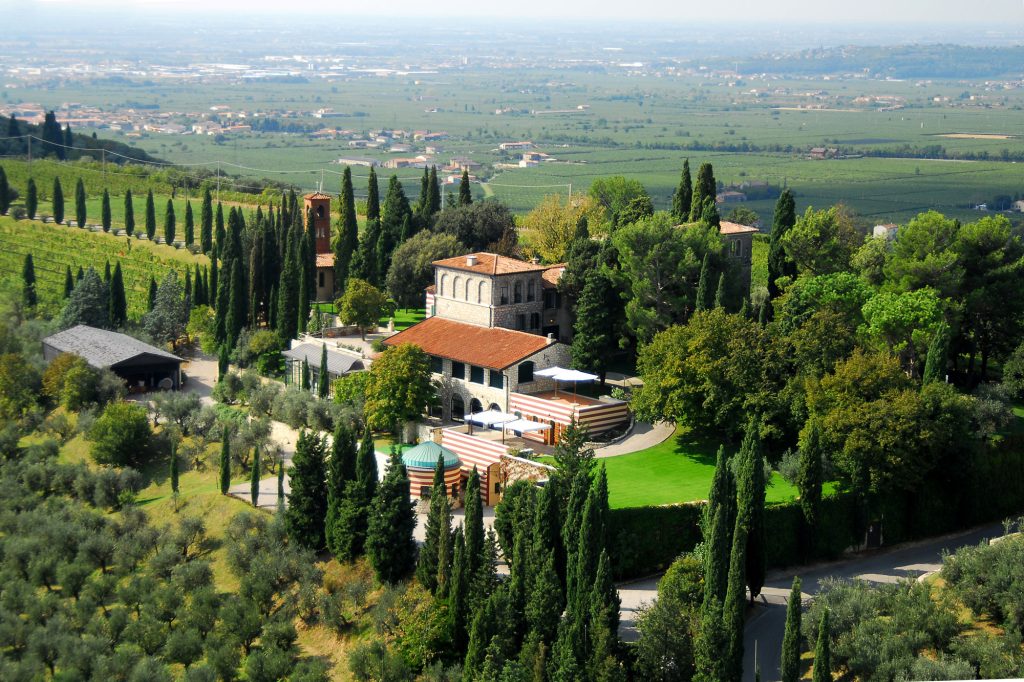
History
The Trabucchi family has grown grapes in Illasi since 1924. Their wine is made in the Val d'Illasi, east of Verona, in the wider Valpolicella area just outside the classic zone. In 2002 the original cellar was joined to a new and larger one, a cellar the estate describes as one of the most notable of its decade for its technical solutions. A Valpolicella consortium listing names Aristide as the third generation working in the cellar, and the estate works with the oenologist Franco Bernabei.
The land and the vineyards
The vineyards lie on hills at about 200 metres above sea level, with olive groves beside them. Directories give different sizes: 13 hectares of vines in one guide, 22 in another. The estate says its wines have been organically certified for over 30 years. The grapes are Corvina, Corvinone, Rondinella, Croatina and Oseleta.
The wines
The current list includes Valpolicella Superiore Galante, Valpolicella Ripasso, and Terra del Cereolo, a Valpolicella Superiore. There is also Amarone della Valpolicella, with a Riserva called Cent'anni, a Recioto della Valpolicella and a Recioto di Soave. A new brand, Comaroto, has a first vintage, 2021, due in 2026.
Today
The cellar is cut into rock over several underground levels. Guided tours cover the vineyards and cellar and end with a tasting of three or five wines, in English or Italian.
- Founded
- 1924
- Vineyards (hectares)
- 13 to 22 (sources differ)
- Main grapes
- Corvina, Corvinone, Rondinella, Croatina, Oseleta
- Winemaker
- Franco Bernabei (consulting oenologist)