


About Castello del Terriccio
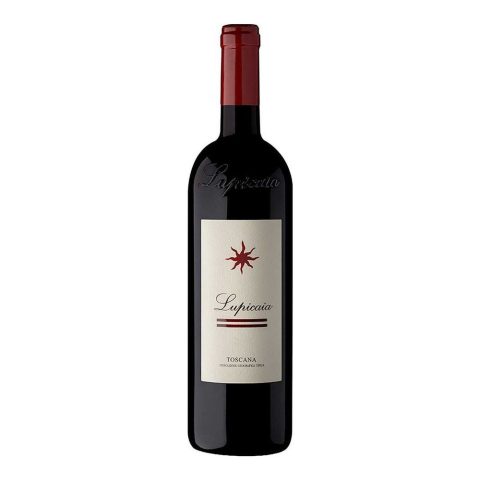
Castello del Terriccio is a large estate located near Castellina Marittima in the coastal Maremma area of Tuscany, Italy. The property spans thousands of hectares and is best known for producing Lupicaia, a Cabernet Sauvignon-based Supertuscan blend that gained significant critical acclaim in the 1990s. The estate also produces wines from Syrah, Merlot, and other international varieties suited to its Mediterranean coastal climate.
Prices are for take away and shipping. The wine bar serves from its own list.



The winery
About Castello del Terriccio
History
Vines have grown in this part of the Tuscan coast since Etruscan times. The ruined medieval castle of Doglia, known as del Terriccio, once served as a signal and protection tower. In the 13th and 14th centuries the bishop of Pisa granted the land to the Gaetani counts, and in the late 18th century the Poniatowski princes bought it and turned it into a farming estate.
The Serafini Ferri marquises acquired it in the first half of the 1900s and carried out large land improvements in the 1920s. Until the 1970s the estate was worked by 63 sharecropping families and was known for cereals. In 1975 Gian Annibale Rossi di Medelana inherited it and refounded it as a winery focused on research into vines and wine.
The land and the vineyards
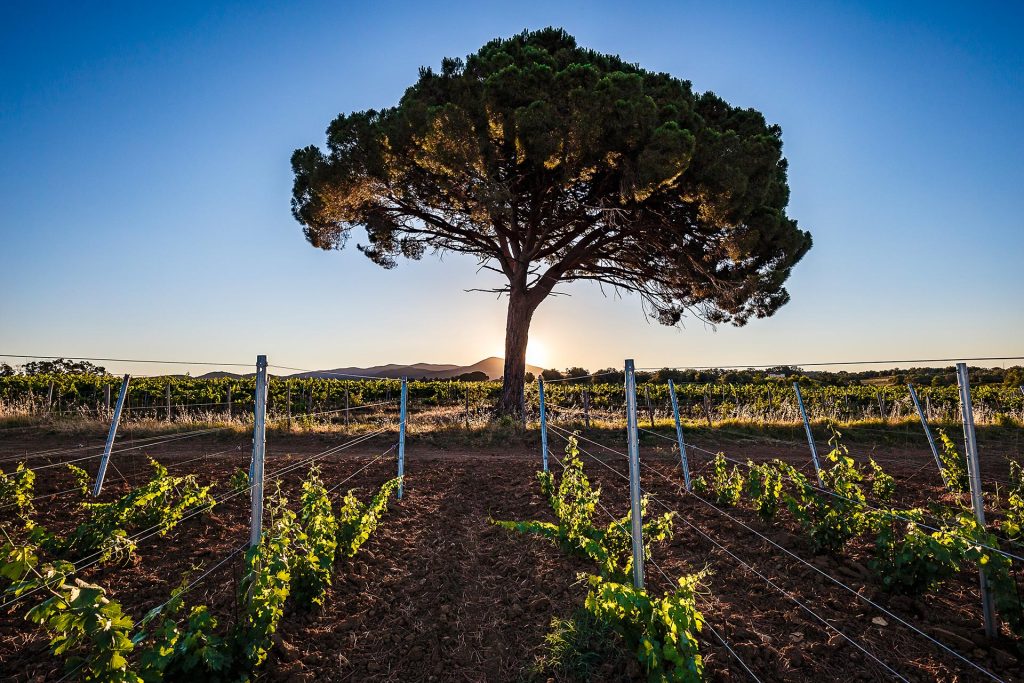
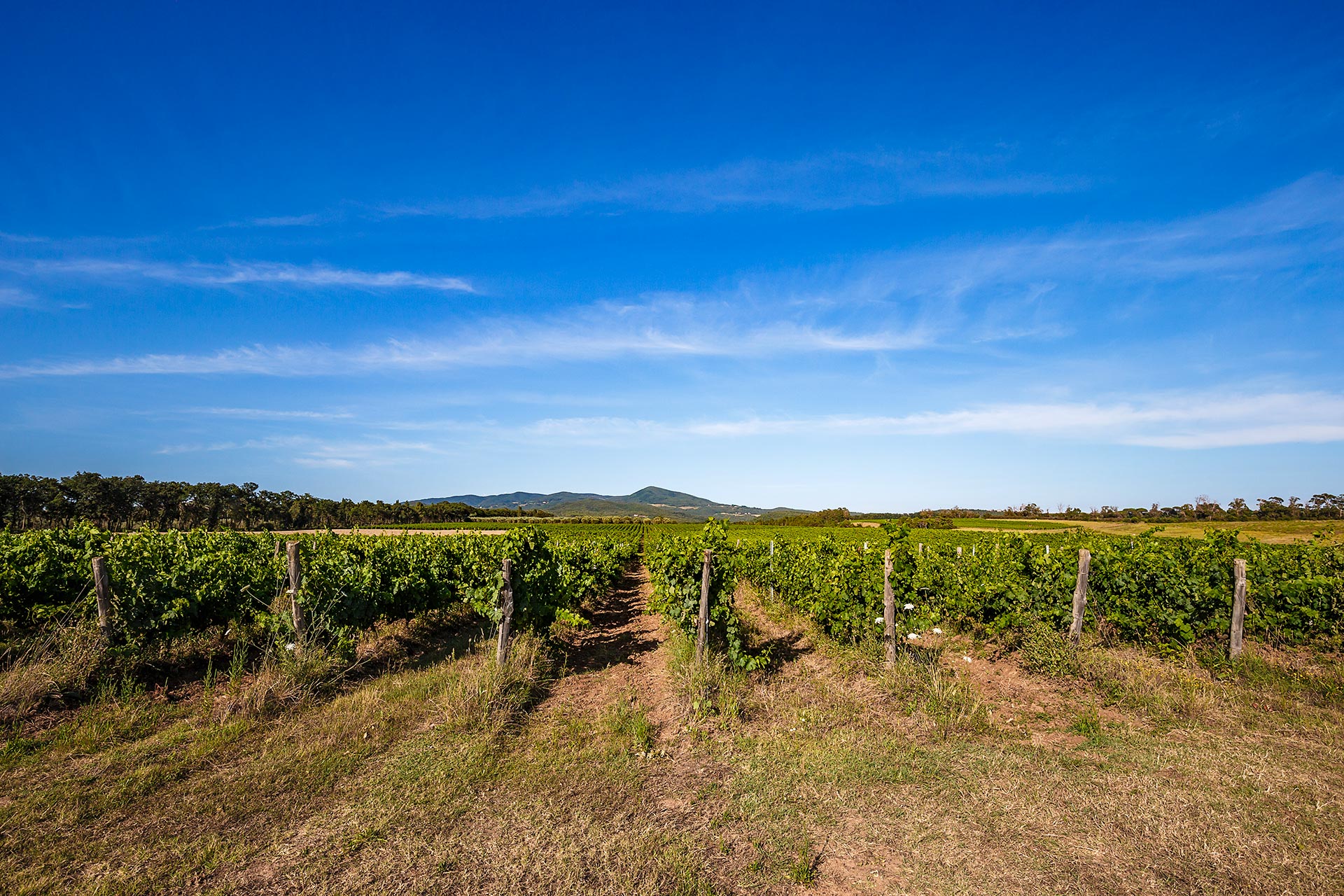
The estate covers about 1,500 hectares on the northern edge of the Maremma, near Bolgheri. Of that, 65 hectares are vineyards and 40 are olive groves. Grassy plains slope down to the sea between Castiglioncello and Bibbona, and on clear days four islands of the Tuscan archipelago can be seen.
Soils are medium textured, a mix of sand, silt and clay with iron and copper. Vineyards are placed to catch sea breezes and light reflected from the water. The Lupicaia vineyards were planted in the 1980s, and an Etruscan sun relic found during that work became the company logo. The rest of the land holds oak and eucalyptus woods, Mediterranean scrub, meadows and Limousin cattle.
The wines
The estate chose international varieties rather than Sangiovese. Chardonnay was planted in 1988 and Sauvignon Blanc in 1989, and Cabernet Franc, Cabernet Sauvignon, Merlot, Syrah and Petit Verdot followed in the early 1990s.
Tassinaia was first made in 1992, Lupicaia in 1993 and the Castello del Terriccio red in 2000. Lupicaia and Castello del Terriccio age about 22 months in wood, Tassinaia about 16 months. Annual production runs from 200,000 to 250,000 bottles.
Today
Gian Annibale Rossi di Medelana died in 2019, and his nephew Vittorio Piozzo di Rosignano Rossi di Medelana, who left a career in finance, now runs the estate directly. The historic cellar dates from the second half of the 19th century and is used for some ageing. An underground cellar opened in 2005 with steel, concrete and wooden tanks and French oak tonneaux. The site also lists a restaurant, a villa and visits.
- Founded
- Refounded as a winery in 1975
- Area
- About 1,500 hectares
- Vineyards (hectares)
- 65
- Main grapes
- Cabernet Sauvignon, Cabernet Franc, Merlot, Syrah, Petit Verdot, Chardonnay, Sauvignon Blanc
- Owners
- Rossi di Medelana family