


Wine from Valle d’Aosta
Wine from Valle d’Aosta
Valle d’Aosta wines: discover this magical land of hidden viticultural gems
Introduction
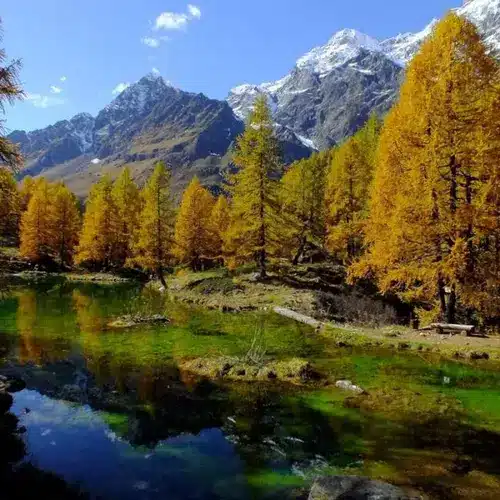
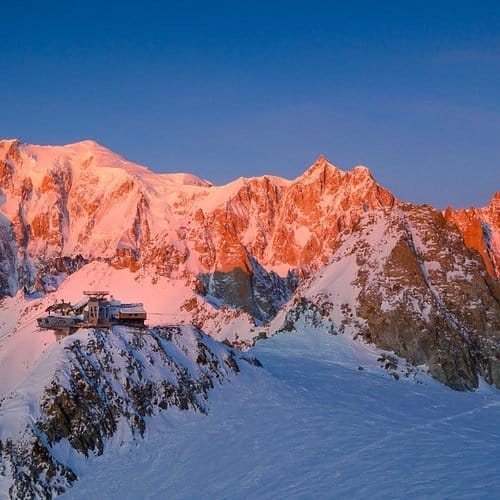
Valle d’Aosta is Italy’s smallest, highest, and least populated region, a staggeringly beautiful Alpine valley on the border with France (to the west) and Switzerland (to the north) where life moves to the steady goatskin drumbeat of ancient mountainous rural life. It is home to Italy’s (and Europe’s) highest point, the towering alp of Mont Blanc, to the Italian side of the Matterhorn, to the gravity-defying chamoix whose hooves cling to invisible ledges on sheer cliff-faces, to one of the great cheeses of northern Italy – and indeed to a small but fabulous wine culture, a hidden gem that acts as a sort of missing link between the French and the Italian oenoverses.
The region is one of the few officially bilingual regions in Italy, with French and Italian both holding official status, although in practice it is effectively trilingual as many use the local dialect, known as valdostano (or Valdôtain or even patois), in everyday life (characteristically, the dialect is something of a cross between Italian and the Alpine variety of francoprovençale). It has an area of only about 3,260 km², roughly the size of two Londons, and a population of under 125,000. The valley proper of its name runs either side of the river Dora Baltea, between the Graian and Pennine Alps, rising from a pair of glaciers in the upper valley, running through the town of Aosta as well as most of the other main settlements of the region, eventually flowing into the river Po in the Vercelli area of Piedmont. Politically it is a part of Italy due to its traditionally falling under the domains of the House of Savoy, the borderland dynasty that rose to become the kings first of Piedmont-Sardinia, and then later of all Italy following the Risorgimento – indeed, the dukes of Savoy became lords of the region a whole millennium ago, in 1032.
A large amount of the Valdostan economy is based in the tourism sector, in particular (naturally, given the location) related to skiing. There are treasures to be found here though, in the local tradition of wood sculpture, and especially in its artisanal agricultural sector, which though small in gross product is mighty indeed in quality – which is where wine comes in.
The wine
Although it is inland and upland, and is designated fairly as having a cool continental climate, the area is known for its very hot and dry weather during the summer, truly ideal wine growing conditions. Being a valley it is, of course, full of slopes, and due to sun exposure advantages the majority of the quality winemaking is made on the northeastern side of the river (indeed it is known for its high count of sunshine hours per year). The valley is crucial for determining differences in the soil, with sandier loam found higher up and the influence of the river being felt further down, with its alluvial soils of clay and pebbles. One particularly interesting feature of the region is that the notorious phylloxera, an insect that destroyed most of European wine in the late 19th century, couldn’t live at the Alpine altitudes, thus giving Valle d’Aosta some of the oldest averages for vines in Europe.
The Valle d’Aosta DOC accounts for the whole region, with seven subzones (each based around an eponymous village) and no IGT or DOCG classifications; meaning in order to qualify for the DOC a wine must satisfy the conditions of wherever it happens to be. It is divided broadly into three areas: the upper valley, the central valley, and the lower valley. Though it has Italy’s lowest total output, with about 330,000 cases produced per year (of which only 36,000 are under the DOC label) and only about 450 hectares under vine, it’s considered a small but powerful region with some exceptional quality to be found in sometimes hard-to-locate bottles. Somewhat surprisingly perhaps, 80% of the production is of red wine, mostly from the appropriately Gallic varieties of pinot noir, gamay, and the intriguing indigenous petit rouge, although nebbiolo (known locally as ‘picotendro’) is predominant towards the southeastern border with Piedmont. There is fine white wine too, however, with another native grape called prié blanc largely to thank for it.
The upper valley is the main home of this grape, where it is 100% responsible for the Blanc de Morgex et de la Salle label, as well as fine sparkling wine made using the traditional method (i.e. the Champagne method), usually blending prié blanc with other white varieties, both indigenous and international (a rosé is also made from the recently-rediscovered teinturier (i.e. dark-fleshed as well as dark-skinned) grape called roussin de Morgex). This area is also where you’ll find Valdigne, the place with the highest-elevated vines in all of Europe, a full 1,200m above sea level.
Moving east to the central valley, the heart of the region’s production and home to four distinct subzones. Enfer d’Arvier used to be its own DOC before being absorbed into the Valle d’Aosta DOC, and is carried by red wines made from at least 85% petit rouge. Torrette is the largest of the four central zones, and also makes a red from mostly petit rouge (minimum 70%). Nus is unusual, in that petit rouge is used to supplement the local vien de Nus variety in its characteristic red; it also makes white wines from ‘malvoisie’ (not, in fact, malvasia, but rather pinot grigio) both dry and passito (or ‘flétri’ in French). Chambave, like Torrette, makes a minimum-70% petit rouge red wine, and like Nus makes whites as well both dry and flétri, though from a moscato grape.
Finally dipping southeast into the lower valley and the influence of Piedmont starts to be felt. There are two subzones, both of which produce red wines based on ‘picotendro’ (nebbiolo). In Arnad-Montjovet picotendro must account for at least 70% of the wine, while in Donnas the minimum is 85% plus a DOC regulation 24 months at least ageing prior to release, at least 10 of which must be in oak.
These latter wines, known sometimes as ‘Barolo’s mountain brother’, have earned a particularly good reputation. But the whole region is one of Italy’s most intriguing; unusual grapes in rare conditions, ancient, hidden traditions and a hybrid feel, deep and fresh and modern and classic all at once. Seek these out, for they are treasures.
Our wines from Valle d'Aosta
A selection of the wines from Valle d'Aosta we sell in our Venice wine shop and ship internationally.


Valle d’Aosta – The breakdown
Location: northwestern border
Climate: cool continental
Soils: sandy, alluvial/argillous
Elevation: very high
IGT, DOC and DOCGS: Valle d’Aosta DOC (subzones: Blanc de Morgex et de la Salle, Enfer d’Arvier, Torrette, Nus, Chambave, Arnad-Montjovet, Donnas)
Main red grapes: petit rouge, picotendro (nebbiolo), gamay, pinot noir
Main white grapes: prié blanc, malvoisie (pinot grigio), moscato
Hidden gem: rosé sparkling wine from roussin de Morgex
About Wine Shop all’Amarone


Wine Shop all’Amarone in Venice offers an exceptional selection of Italian wines, spotlighting the distinguished Amarone della Valpolicella. In addition to our Amarone focus, we proudly feature select wines from Lombardy, showcasing the diversity and richness of Italy’s winemaking regions. Our curated collection is designed to offer wine lovers a taste of Italy’s finest, from the robust flavors of Amarone to the unique profiles of Lombardy wines.

