


Wine from Campania
Wine from Campania
Wines of Campania: the soul of the volcano
Introduction
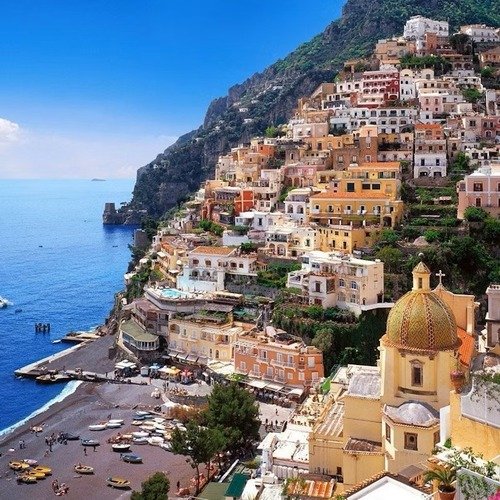
The home region of the city of Naples, a whole universe and culture of its own, celebrated for its natural beauty, its heart-stopping vistas, historic towns like Amalfi and otherworldly islands like Capri, for food like pizza and mozzarella di bufala, a region both deeply ancient and somehow sharply modern as well. Campania is a hub of traditional and contemporary culture, the timeless beauty of the Bay of Naples, the rolling hills of Irpinia – and a reminder of the terrible power of nature, the ruins of Pompeii and Herculaneum lying, as does Naples, in the shadow of the snoozing but very much living volcano, Mount Vesuvius.
The region lies on the Tyrrhenian Sea in the southwest of Italy, bordering Lazio to the northwest, Molise to the straight-north, Puglia to the northeast and Basilicata do the southeast. It’s divided into five provinces: Caserta on the Lazio border, Benevento on the Molisan, Avellino on the Pugliese, Salerno stretching down along the coast to Basilicata, and Naples in the dead centre of the coastline. The volcanic nature of the region is borne out in its geology, which is extensively run through with igneous deposits and especially the soft, crumbly, white rock known as tufo. The inland is marked by distinct mountainous massif regions, but while elevation is generally high it doesn’t climb too high.
The wine
The region’s name is the ancient Latin word for ‘countryside’, a reference to its remarkable fertility thanks to the rich volcanic soils, very much including wine. In the time of the Romans it was known as a distinctly Greek region (Naples was founded as a Greek city, whose name was ‘Neapolis’ – Greek for ‘New City’), and its most red important grape was thought for many years to have been a Hellenic import, though it turns out to be a native: aglianico.
Aglianico is a versatile, bright red wine, with pronounced tannins and freshness as well as a tendency towards bitter cocoa and refined plumminess. It is responsible for two of Campania’s four DOCGs, and both of its red ones. Aglianico del Taburno in the province of Benevento, where the more continental climate inland allows for the diurnal temperature variation and long growing seasons crucial to ensuring the high acidity and judicious ripeness necessary for long ageing.
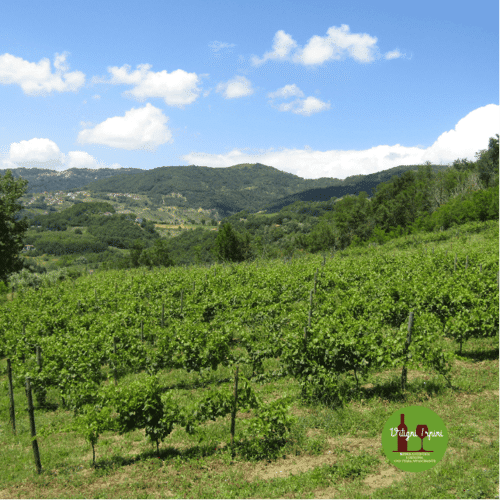
The other, and the one for many regarded as the classic expression of the aglianico grape, is Taurasi DOCG in the neighbouring province of Avellino (roughly coextensive with the historic area of Irpinia). The tufo, the calcareous marls (read: chalky clays and silt) and, vitally, the presence of limestone, as well as the day-night temperature changes and altitudes of at least 400m, make for an almost perfect recipe for a fine, full wine of sometimes jaw-dropping sophistication. Aglianico makes at least 85% of the wine, with the rest often supplied by local variety piedirosso, though 100% aglianico wines are generally preferred, especially in the highest-altitude (and perhaps highest-quality) areas like Jampenne and Torre. The wines must spend at least a year in barrel and two further years in bottle prior to release, while Riserva-labels must spend at least 18 months in barrel.
Aglianico is ubiquitous in Campania, to the extent that there aren’t a lot of red wines – especially ones with DOP recognition – that get made without it. It is perhaps most notable in the Falerno del Massico DOC, in the modern province of Caserta, the home of the great ancient wine the Romans called ‘Falernian’, which Pliny the Elder claimed was so strong it could be set alight by an open flame! (We at All’Amarone do not condone home efforts to repeat the experiment.)
Among the few places that don’t rely on aglianico are the DOCs based on the Phlegrean Islands off the Gulf of Naples: Capri DOC, Ischia DOC and the Procida subzone of the wider Campi Flegrei DOC. The most important grape here is piedirosso, a quite full but low-tannic red grape capable of remarkable minerality and earthiness. Here it is often blended with sciascinoso, a very acidic local grape, and in Procida sometimes some aglianico thanks to the influence of the mainland.
Perhaps the most famous piedirosso-based wines are the evocatively-named Lacryma Christi del Vesuvio, part of the Vesuvio DOC. As with the Phlegrean Island wines they are blends of piedirosso with sciascinoso (known locally as olivello) and aglianico.
But of course, there are substantial white wines from Campania as well. Indeed, that famed, aforementioned Falernian wine was actually white (sweet white wines being generally the most beloved in ancient Rome). That wine was – though is no longer – made from the grape known as greco – a grape that, elsewhere in Campania, is the grape behind one of the region’s two white DOCGs.
Greco di Tufo DOCG in the province of Avellino is pretty much as the name suggests – wines of mostly greco from soils of mostly tufo (a local grape called coda di volpe can account for a maximum of 15% of the wine – frequently, however, they are fully varietal). That soil provides both excellent drainage and something common to a lot of volcanic soils, namely minerality. The results are an exceptionally floral, soft, steely wine, increasingly regarded in the wine world for its combining of refreshment and complexity.
The other white DOCG – again in Irpinia, which is something of Campania’s wine superpower – is the Fiano di Avellino. Considered likely to be a truly ancient vine, fiano is something of a finicky, risky specialism for a wine area, with its variable yields and small, late-ripening grapes – quite something to demand be at least 85% of the final wine. However, in the mineral-soiled, high-altitude terroir in the foothills around Avellino, it can produce very special wines indeed, slightly honeyed, some of the most perfectly rounded fruit flavours in Italian white wine, as well as great depth and sophisticated minerality. A truly top-tier white wine.
But we’ve left a question hanging a few paragraphs ago – what is, in fact, the grape now used to make the white Falerno di Massico? The answer is the third of Campania’s top three white grapes – the enigmatic falanghina (Falanghina Flegrea, to give it its full name to distinguish it from the less important and unrelated Falanghina Beneventana). Falanghina is perhaps most notably the power behind the Falanghina del Sannio DOC in Benevento, and is an available option as a base for Penisola Sorrentina Bianco DOC. Falanghina is quite variable in terms of alcohol and acidity, but is generally noted for its rather nutty character and, especially on the coast, for a distinct touch of salinity that make it one of the nation’s most distinctive.
Naturally, Lacryma Christi and the islands do things differently, however. Over on Vesuvius, the aforementioned coda di volpe is the main grape, a rich, deep-coloured, quite substantial white wine grape which is given a bit of acidity in the blend by the addition, often, of some greco. On the islands however, especially on Ischia, yet another grape is preferred, the ultra-rare biancolella, which tends to make slightly greenish, refreshing wines, with light citrus and cubeb notes along with something all the Campanian whites are capable of, a touch of bitter almonds.
Campania is an ancient winemaking region, one renowned for taking disasters (Vesuvius, earthquakes, phylloxera) and fashioning them into opportunities, for its immense and justified pride in its local grape varieties, for its openness to the new married to faith in tradition. A region whose jewels require little advertising to persuade wine-lovers.
Our wines from Campania
A selection of the wines from Campania we sell in our Venice wine shop and ship internationally.


Campania – The breakdown
Location: southwest.
Climate: hot mediterranean, tending towards continental inland.
Soils: heavily volcanic, noted for tufo throughout.
Elevation: medium-high.
DOCG and select DOCs: Aglianico del Taburno, Fiano di Avellino, Greco di Tufo, Taurasi DOCGs; Campi Flegrei, Capri, Costa d’Amalfi, Falanghina del Sannio, Falerno del Massico, Ischia, Penisola Sorrentina, Vesuvio DOCs.
Main red grapes: aglianico, barbera, piedirosso, sangiovese, sciascinoso.
Main white grapes: biancolella, caprettone, coda di volpe, falanghina, fiano, greco, malvasia.
Hidden gem: the best wines of Lacryma Christi del Vesuvio are truly strange and haunting.
About Wine Shop all’Amarone


Wine Shop all’Amarone in Venice offers an exceptional selection of Italian wines, spotlighting the distinguished Amarone della Valpolicella. In addition to our Amarone focus, we proudly feature select wines from Lombardy, showcasing the diversity and richness of Italy’s winemaking regions. Our curated collection is designed to offer wine lovers a taste of Italy’s finest, from the robust flavors of Amarone to the unique profiles of Lombardy wines.

