


What is a Super Tuscan?
The History & the Best Super Tuscan Wines
What is a Super Tuscan?
The History & the Best Super Tuscan Wines
History
There has, naturally, long been a certain cross-pollination between France and Italy on the wine front. Of course, this is most strongly felt in the northwest of Italy where the influence of the border is particularly felt (the presence of grapes like gamay in Val d’Aosta, for instance, attests to this). But it isn’t just limited to the border – plantings of merlot and pinot noir have been especially prominent all across the north of the country for a long time, while chardonnay can be found virtually all over the country now. However, many of these French varieties had been regarded as place fillers – reliable, dependable vines that will yield oenologically suitable fruit to make simple wine or perhaps fill out the gaps in a blend. It wasn’t until the mid-1960s that the true potential of matching these grapes to Italian terroir came to be considered.
And where better than one of Italy’s most famous regions for wine, indeed one of its most famous regions full-stop: Tuscany. Back in the 1940s, a marchese with some vineyards near the village of Bolgheri (just a bit inland from the provincial port city of Livorno) had the idea of planting some cabernet franc and cabernet sauvignon on his lands. He liked the result but, not convinced it would be to the local palate, decided to reserve it for his own use, as his own wine. The marchese was Mario Incisa della Rocchetta; the estate was known as Tenuta San Guido.
For two decades this Tuscan cabernet mash-up was to be found only on the marchese’s personal table, enjoyed only by an incredibly select group of those in the know. Two of them however – legendary winemaker Piero Antinori and Incisa della Rocchetta’s own son Nicolò – were to change all of that in the mid-1960s. Resolutely convinced that Tenuta San Guido was sitting on a truly extraordinary treasure, they pressured Mario to put it out into the world under the estate’s label. He yielded, and in 1971 the 1968 vintage became the first commercial release of what would become one of world wine’s most hallowed names: Sassicaia.


What was it that made this wine so fabled? Was it the terroir, the diverse, calcareous soil rich in a type of schist particular to Tuscany known as galestro? Was it the stones, from which the wine takes its name (‘sasso’ being the Italian for ‘stone’)? Was it the gentle but demanding elevation, or the south-southwest exposure? Was it the extremely demanding standard of winemaking, from the crazy selectivity in the vineyard to the fascinating fusion of Bordeaux grapes with Italian-style ageing in large botti of Slavonian oak?
The answer was of course yes, and much more besides. But it wasn’t only the quality of the juice that we’re talking about here – because this was a watershed moment in the history of Italian wine, a moment which, in order be understood, needs to be considered in context. In 1976, wines from Napa Valley, California, bested French counterparts in a blind taste test nicknamed ‘the Judgement of Paris’, to the shock and chagrin of many (not least the competition’s British organiser, French wine seller and aficionado Steven Spurrier). Two years later French wine supremacy suffered another blow, and this time it was Italy that inflicted it, as the Sassicaia was named the best ‘claret’ (i.e. Bordeaux-style wine) from 11 countries by a super-prestigious panel featuring luminaries such as Hugh Johnson.
Tuscany, seen as something of a crusty old gentleman in the wine world, had just transformed itself into a dangerous young punk. Antinori, following his enthusiasm for Incisa della Rocchetta’s wine, launched his own version in 1971 incorporating some of the traditional sangiovese grape, naming it ‘Tignanello’. Between the two of them and another Antinori family wine brought out a decade later (the historic ‘Ornellaia’), these wines are considered the true advent of a new genre: the ‘Super Tuscan’.


But it wasn’t just internationally that the delicate feathers of the wine world were ruffled. You see, the prestigious categories of wine in Italy are reserved for those considered exemplars of tradition. In order to get a top designation, and all the caché and commercial protections it would entail, it’s not enough to be a ‘good wine’ – after all, how would you even define that? Instead, the denominazione di origine category exists for those wines considered to have been made in accordance with local stylistic identity. So, a DOC (or indeed DOCG – the G is for ‘guaranteed’ – the highest category available) wine in the Veneto might be a Soave, or indeed an Amarone della Valpolicella, made according to the exacting specifications governing those wines’ production, which if not adhered to would render it illegal to sell the bottle under the regional label. The same applies for Aglianico del Vulture in Basilicata, or Franciacorta in Lombardia, or Chianti, Brunello di Montalcino, or Vino Nobile di Montepulciano in Tuscany.
This system is an excellent way of showcasing traditional styles of wine, helping the customer know what they’re getting and maintaining tradition – but it doesn’t always help innovation. Which was a huge problem for the producers of these Super Tuscans, as these enormously complex, demanding, hard-produced wines were in the end sold under the label reserved for the absolute humblest offerings in the Italian system: as vini da tavola.
This was obviously an untenable situation, both for the Super Tuscan producers themselves and the Italian wine market as a whole, which found itself bizarrely selling some of its most prestigious global names alongside ₤3,000 (£1) wine with no label and a secret ingredients list longer than this paragraph, technically considered wine less worthy of regulatory guarantees than even the cheapest prosecco. But it was understandable – the DOC system was designed to protect specific styles of wine; how do you regulate for a wine style whose whole appeal was its innovative nature.
The answer eventually came in 1992, with the creation of a new tier of regulation: the IGT (indicazione geografica tipica), roughly equivalent to the French category of vin de pays, itself one step above vin de table i.e. Italy’s vino da tavola. IGT is a broad category by definition, it being impossible to predict exactly what wines might be produced under it, but through a relatively flexible procedure that allows for variation but which mandates quality in ways that are virtually universal in winemaking – limiting yields, number of ingredients, and so on – wines which don’t conform to a traditional style but which nevertheless are considered ‘geographically typical’ (that is to say, expressive of terroir) now have a way of assuring the customer of a certain level of quality.
And so the Super Tuscans rejoiced, and they are now the poster-child style for the value of the IGT classification that has spread all over Italy and allowing innovation to flourish. Every time you have a 100% petit verdot from Lazio aged in an amphora, or some crazy-rare grape like rondinella bianca gets made into a varietal white wine from a red area such as Valpolicella, you can thank a few marquesses in Tuscany (and a certain oenologist we’ll mention soon), first for growing the grapes in the first place, and secondly for making sure they turned into wine of the most unimpeachable reputation.
Although, of course, Sassicaia itself is not an IGT, as Bolgheri was made into its own DOC in 1994!
Characteristics and some names to look out for
Naturally, it is impossible to summarise the characteristics of a Super Tuscan wine. After all, the defining characteristic of the category is essentially ‘not Chianti’ – indeed, not Chianti of a very specific recipe that dominated Tuscany right up to the 1970s. The Ricasoli Blend, devised in the 19th Century by local baron Bettino Ricasoli, was virtually synonymous with the Chianti style and much copied across the whole of Tuscany as well (though the extent to which this is genuinely true is disputed). The ‘Iron Baron’ felt that about 70% sangiovese, leavened by the red canaiolo and the white malvasia, was the best way of ensuring the sturdiness and aromatic complexity of the wine (provided by the sangiovese), while maintaining fruit sweetness (canaiolo) and freshness and drinkability (malvasia). The inclusion of the white grape – sometimes malvasia, sometimes trebbiano toscano – was particularly characteristic of Tuscany, and it was even included in the early vintages of Sassicaia until it was ditched in 1975.
The man who did that was Giacomo Tachis, a winemaker and oenologist hired by both Tenuta San Guido and the Antinori family to craft their innovative flagship wines. Tachis, sometimes called the ‘Father of the Super Tuscans’ and generally considered a vital figure in the Italian wine boom of the postwar era, wanted to create wines with greater robustness of body and character, and to do away with that slightly washy thinness that many international critics associated with everyday Italian wine. By focusing on unconventional blends with often French grapes, using barrique-type barrels and at first reducing then eliminating white grapes, Tachis revolutionised Italian wine, internationalising it and setting a standard to this day for what a ‘Super Tuscan’ should be.
And while that doesn’t have have to be the ‘anti-Ricasoli’ type, generally speaking when we speak of ‘Super Tuscans’ we know what we’re looking for. Whether sangiovese is involved or not, we definitely expect Bordeaux grapes – cabernets franc and sauvignon, along with merlot, petit verdot and even carmenère – to feature prominently. We expect a certain gravity and purity of fruit, a modern, ripe, full-on mouthfeel, and probably a good punch of oakspice. We may even expect higher alcohol-by-volume than we might for a traditional Chianti, say, more of an emphasis on weight than on acidity, and a more substantial profile of dishes to pair it with.
However, one thing has changed noticeably since the 1970s and 80s: whereas the trailblazers of this style were and are big-time prestige wines, there are Super Tuscans at every price level now, from the top-end, multi-decade agers to something you get on the way home for a tenner to have with the pasta al ragù. Here are some names to look out for!
Where the Super Tuscans Are Made
From the cypress lined coast of Bolgheri to the hills of Chianti Classico and the slopes of Montalcino, these are the estates in this guide. Tap a pin or a name to jump to the wines we have in our wine shop.
Pins mark the estate area, not a street address. Most estates open only for booked visits.
Antinori
One of the real grandfathers of the Super Tuscan, the Antinori family could not be more established Tuscan wine (and literal) nobility, having held lands under vine since at least 1385! Producers of traditional wines like Chianti as well as the more innovative stuff, you just cannot think of Super Tuscans – indeed Tuscan wine in general – without stopping and paying some respect to the name of Antinori.
Notable wines: Solaia; Tignanello.


Bibi Graetz
Based in Fiesole and named for its founder, Bibi Graetz is peculiar for taking a radical approach to the Super Tuscan idea – instead of reducing the role of sangiovese, he instead has made it not the main grape but the only grape of his reds, breaking with tradition and making top-class varietal wines that can only be classified under IGT Toscana rosso labels.
Notable wines: Colore; Soffocone.


Castello del Terriccio
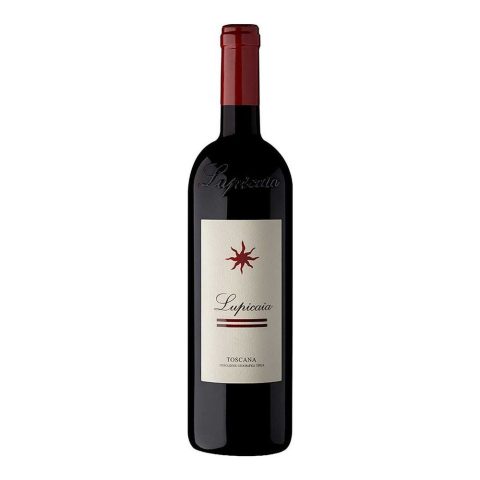
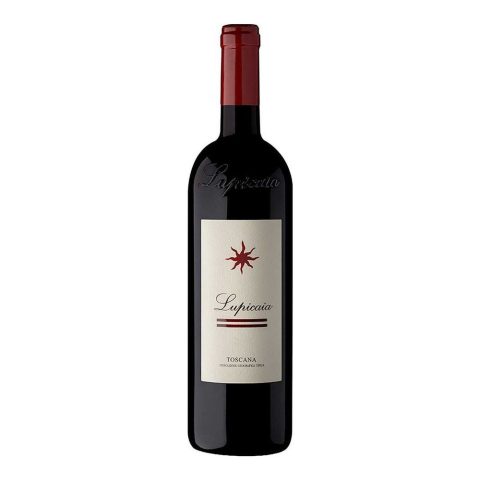
A truly ancient wine territory in the province of Pisa that became turbocharged when it was inherited by Gian Annibale Rossi di Medelana in 1975. Gian Annibale made drastic, enormous changes in the vineyard, and was rewarded in 1993 when the launch of the ‘Lupicaia’, an incredibly fine and precise expression of (mostly) cabernet sauvignon, took the wine world by storm.
Notable wines: Castello del Terriccio, Lupicaia, Tassinaia.


Fattoria delle Pupille
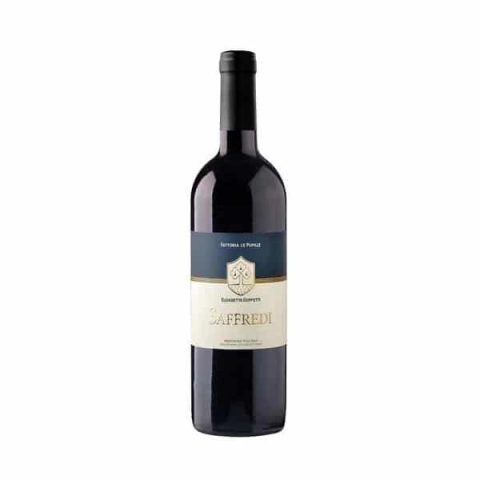
In the heart of Maremma, near the Tyrrhenian coast, Fattoria delle Pupille is a women-driven azienda which first attained a bit of fame as a producer of top-level Morellino Riserva in the early 1980s, but which later in the decade became an icon with the release in 1987 of the Saffredi, a left-bank blend of unbelievable concentration and a touch of salinity that’s virtually unique among the great wines of this style.
Notable wines: Saffredi.

Fontodi
You know the label in all probability, the classic blue cross on the white background with the kind of font-work you associate with Assassin’s Creed II…but this Chianti denizen hides a secret (OK, a totally poorly hidden secret): amid the utter respect for tradition, arguably their star wine is a Super Tuscan, and a hugely important one at that. Flaccianello della Pieve was, when it came out, the first Super Tuscan to go 100% sangiovese, a commitment to the variety and to the varietal way of thinking that utterly changed the game in the parts of Tuscany (i.e. outside of Montalcino) to whom anything but blending was anathema. A true legend.
Notable wines: Flaccianello della Pieve.


Isole e Olena
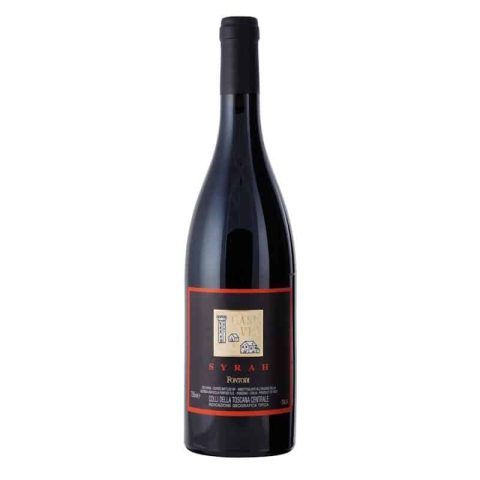
Halfway between Florence and Siena, in the heart of the historic Chianti Classico region, you will find 56 hectares of steeply sloped vines belonging to the De Marchi family since 1956, producing some of the most beguiling wines in the whole area. Isole e Olena are something of a cult winery – they don’t even have a regular website – and if their Chianti is the stuff of legend, their varietal sangiovese expression called Cepparello is practically mythic at this point. So elegant it’s almost like it’s wearing a tailored suit and dancing a graceful minuet, it is nonetheless also famous for its black brambly punch and persistent spice.
Notable wines: Cepparello.


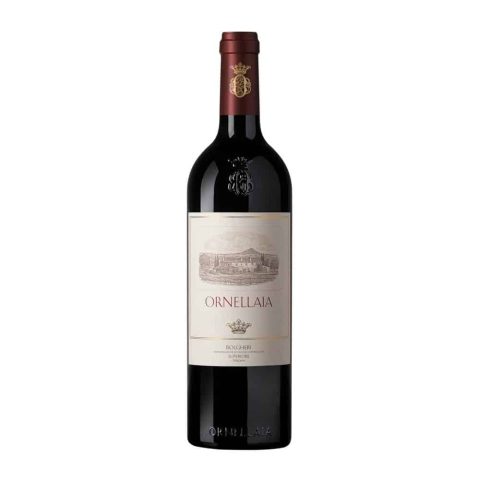
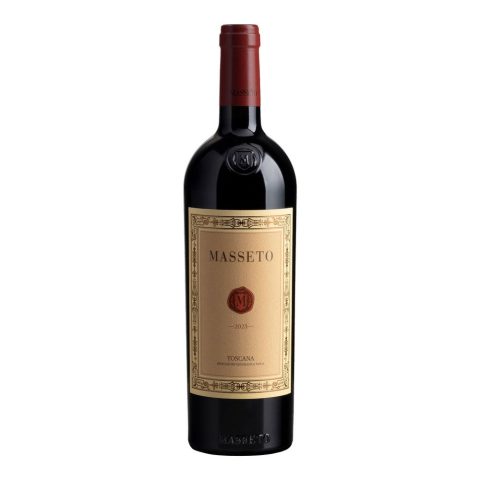
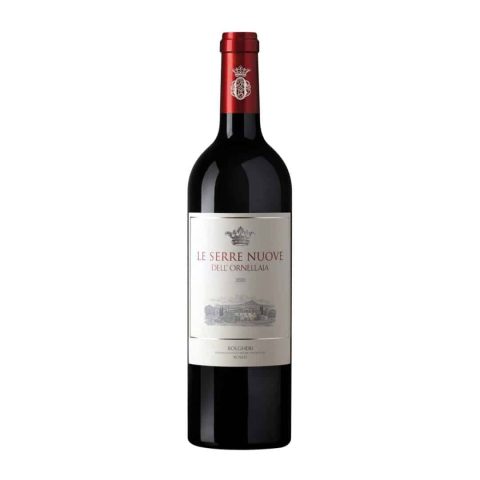
Ornellaia e Masseto
You can’t spell ‘Super Tuscan’ without ‘Ornellaia’. Lodovico Antinori’s response to both Sassicaia and his older brother Piero’s Solaia wine, which was released under the family label. Lodovico purchased the lands in Bolgheri directly nextdoor to those that produce Sassicaia, and planted them in 1981, first producing a vintage in 1985. The wine is a proper Bordeaux blend, usually comprising (in order of prominence) cabernet sauvignon, merlot, cabernet franc, and petit verdot, and is renowned for its extreme, St Estèphe-like elegance and deep complexity that rewards time in the cellar. In addition to the classic original the winery also makes a second wine in Le Serre Nuove, the more accessible Le Volte, and the near-100% merlot single-vineyard Masseto (named for the hill the vines live on), a wine considered so important that the whole azienda renamed itself to include it. A genuine superstar.
Notable wines: Ornellaia, Le Serre Nuove, Le Volte, Masseto.


Tenuta San Guido
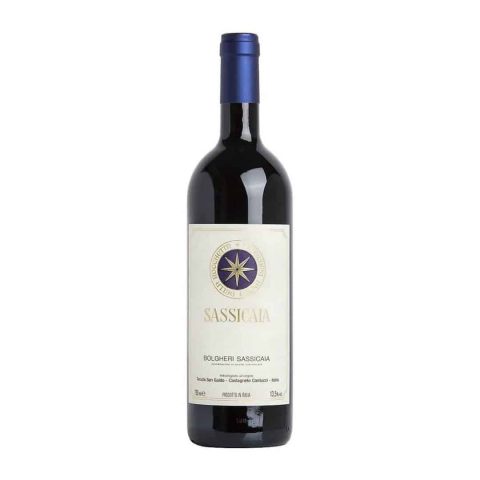
And, of course, the one that started it all. We have already gone into the remarkable history, the casual experiment in the 40s that, decades later, would lead to a reshaping of the whole Italian wine system. As well as the iconic Sassicaia, San Guido produces a second wine called Guidalberto and a more affordable option, Le Difese, which incorporates some sangiovese in the blend.



More Super Tuscans in Our Wine Shop
The names above opened the road. On our shelves near Rialto you will find a few more Tuscan reds that belong in the same conversation, from the hills of Chianti to the coast of Bolgheri and the slopes of Montalcino.
Montevertine
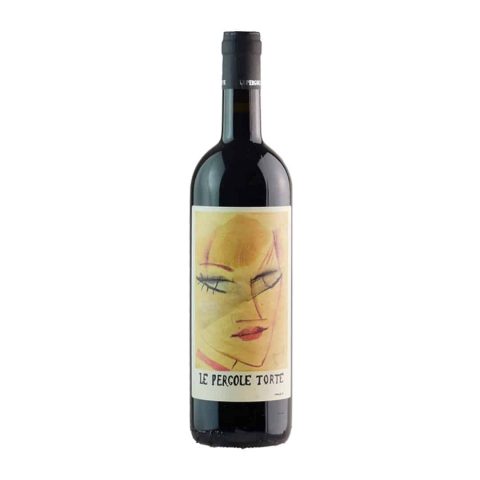
Sergio Manetti bought Montevertine, just outside Radda in Chianti, as a country house in 1967 and soon began to make wine. His Le Pergole Torte, first made in 1977, was pure sangiovese at a time when the Chianti rules still asked for white grapes in the blend, so it had to leave the cellar as a simple table wine. His son Martino runs the estate today, and Le Pergole Torte has become one of the most sought after sangiovese wines in Italy, with a long life ahead of it in the bottle.
Notable wines: Le Pergole Torte; Montevertine; Pian del Ciampolo.


Tenuta Luce
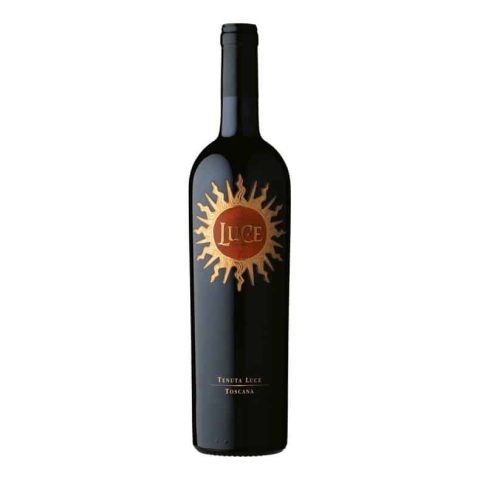
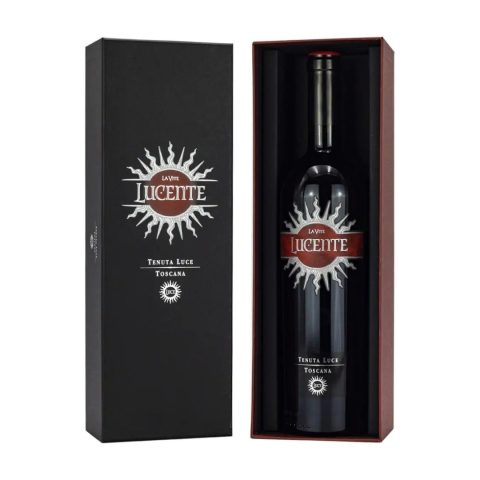
Luce began as a partnership between Vittorio Frescobaldi and Robert Mondavi, with a first vintage in 1993, and has been run by the Frescobaldi family alone since the Mondavi share was bought out in the 2000s. The estate lies on the southwest side of Montalcino, yet its main wine is no Brunello: Luce blends sangiovese with merlot for dark, generous fruit and polished tannins that reward a few years of patience. Lucente is the younger wine, ready to open sooner.
Notable wines: Luce; Lucente.

Le Macchiole
Eugenio Campolmi and Cinzia Merli planted their first vines in Bolgheri in the early 1980s, when the area was known for Sassicaia and very little else. After Eugenio died in 2002 Cinzia carried the estate forward, and Le Macchiole is now famous for wines from a single grape each: Paleo from cabernet franc, Scrio from syrah and Messorio, a pure merlot that stands among the great merlots of Italy.
Notable wines: Messorio; Paleo; Scrio.

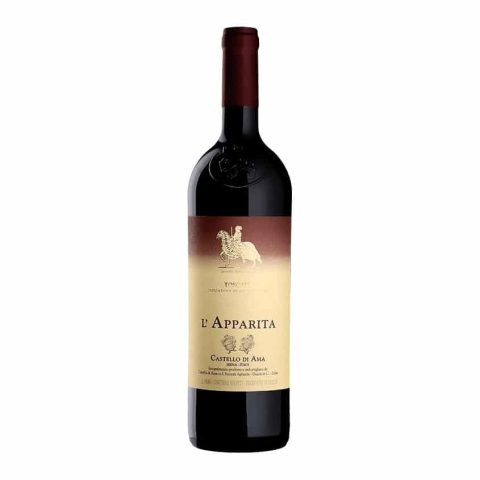
Castello di Ama
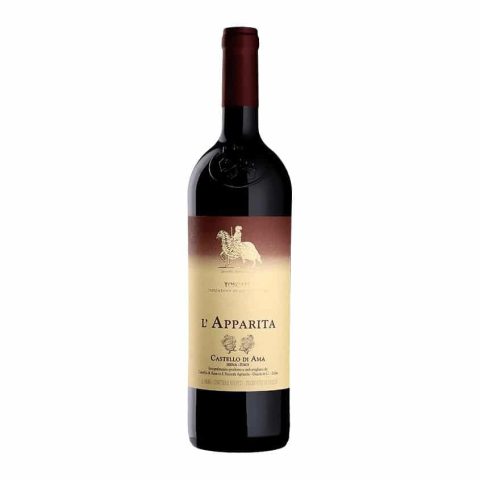
High in the hills of Gaiole in Chianti, Castello di Ama is best known for its Chianti Classico, but in 1985 winemaker Marco Pallanti released L’Apparita, one of the first Italian wines made from merlot alone. It is still a reference point for Tuscan merlot: dense, velvety and built for the cellar. Marco and his wife Lorenza Sebasti run the estate, where works of contemporary art sit among the vines and the cellars.
Notable wines: L’Apparita.
Petrolo
In the Valdarno hills between Florence and Arezzo, away from the famous Chianti villages, the Bazzocchi Sanjust family makes Galatrona, a pure merlot named after the medieval watchtower that stands above the vineyards. First made in 1994, it put Petrolo on the map of serious Tuscan reds. Torrione, mostly sangiovese, is the other name to know from this estate.
Notable wines: Galatrona; Torrione.


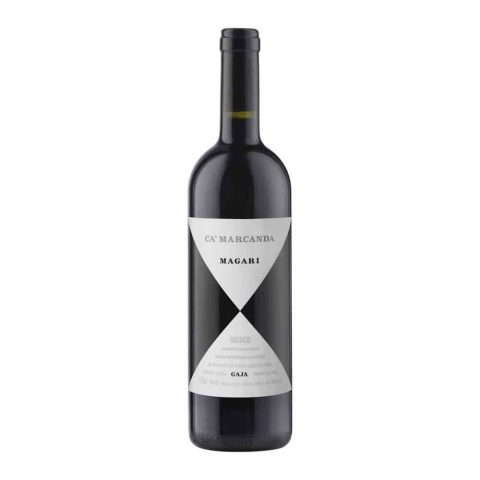
Ca’ Marcanda (Gaja)
When Angelo Gaja, the great name of Barbaresco, came to Bolgheri in 1996, it took many meetings to convince the owners to sell, hence the name Ca’ Marcanda, “house of endless negotiations” in Piedmontese dialect. The estate makes three reds from Bordeaux grapes, with some syrah and sangiovese in the youngest: Promis, the more open Magari and Camarcanda, the estate’s top wine.
Notable wines: Camarcanda; Magari; Promis.

About Wine Shop all’Amarone


Buy “Super Tuscan” Wines at all’Amarone
At Wine Shop all’Amarone, we are proud to offer Super Tuscan wines for purchase. Our selection celebrates the prestigious history of Italian winemaking tradition allowing us, as wine enthusiasts and collectors, to share the exquisite tastes and storied heritage of these unique Italian Wineries.
Send your request now by using the form below
Send your request now by using the form below
Please note that we are Closed on Sundays – Open Monday to Saturday from 10:00 AM to 7:30 PM

